

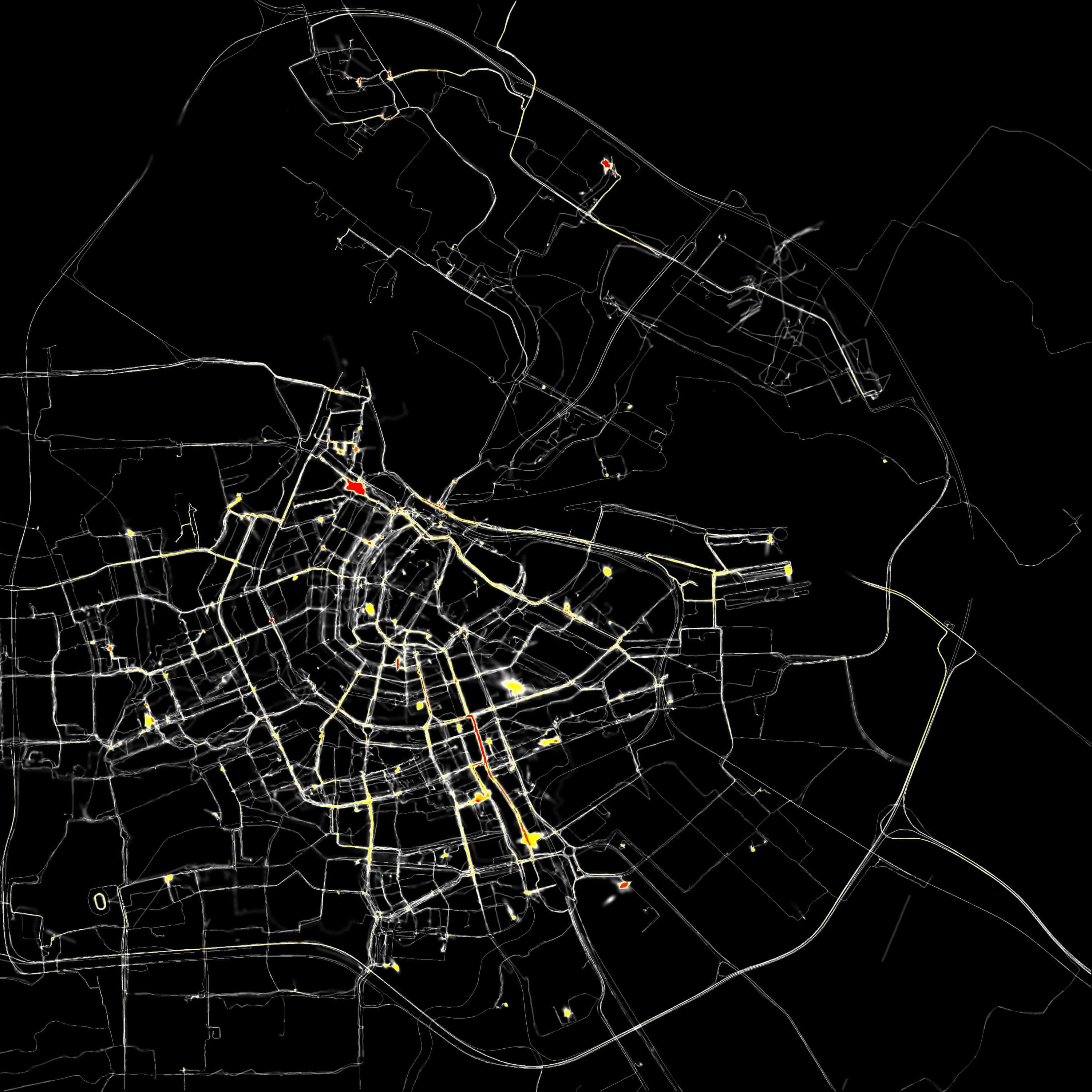
Cumilation of routes in high resolution
Intro
Reactivating AmsterdamREALTIME has become a reality. We have restored the 2003 Flash-based animation and updated the web platform to meet contemporary expectations.
Follow this link to find the restored work:
We are happy to share the following events and presentations in this context:
– 3 September – 3 October 2026 Enter/Public/Space ROZENSTRAAT – a rose is a rose is a rose.
– March 24 to June 14 installation in the hall of the Stadsarchief Amsterdam
– March 27, presentation at LI-MA Transformation Digital Art 2026, day 2
– March 31 Terug naar Toen AmsterdamREALTIME bij Waag Futurelab
– May 7 Workshop “De lijnen van de Nieuwmarkt” Waag Futurelab
– Ongoing: AmsterdamREALTIME is permanently exhibited online at Allmaps where it can be explored in the context of (historical) maps of Amsterdam.
In 2002, the pioneering locative media art project AmsterdamREALTIME playfully showcased how GPS technology would revolutionize human orientation and spatial memory years before the smartphone era.
In the two decades since, AmsterdamREALTIME has grounded our work on mobility and landscape, and has been a beacon for many artists and art historians who are also fascinated by the experience of space.
As part of the restoration, we revised the project with former participants and team members, emphasizing the changes that have unfolded in media art, and in the digitalized experience of space. Find their reactions here.
We ara happy to collaborate with our partners:
-creative coder Bente van Bourgondiën
-Waag Futurelab
-Front-end developer- designer Alain Otjens
-LI-MA living Media Art
-curator Sanneke Huisman.
The project is possible thanks to the generous support of the AFK.
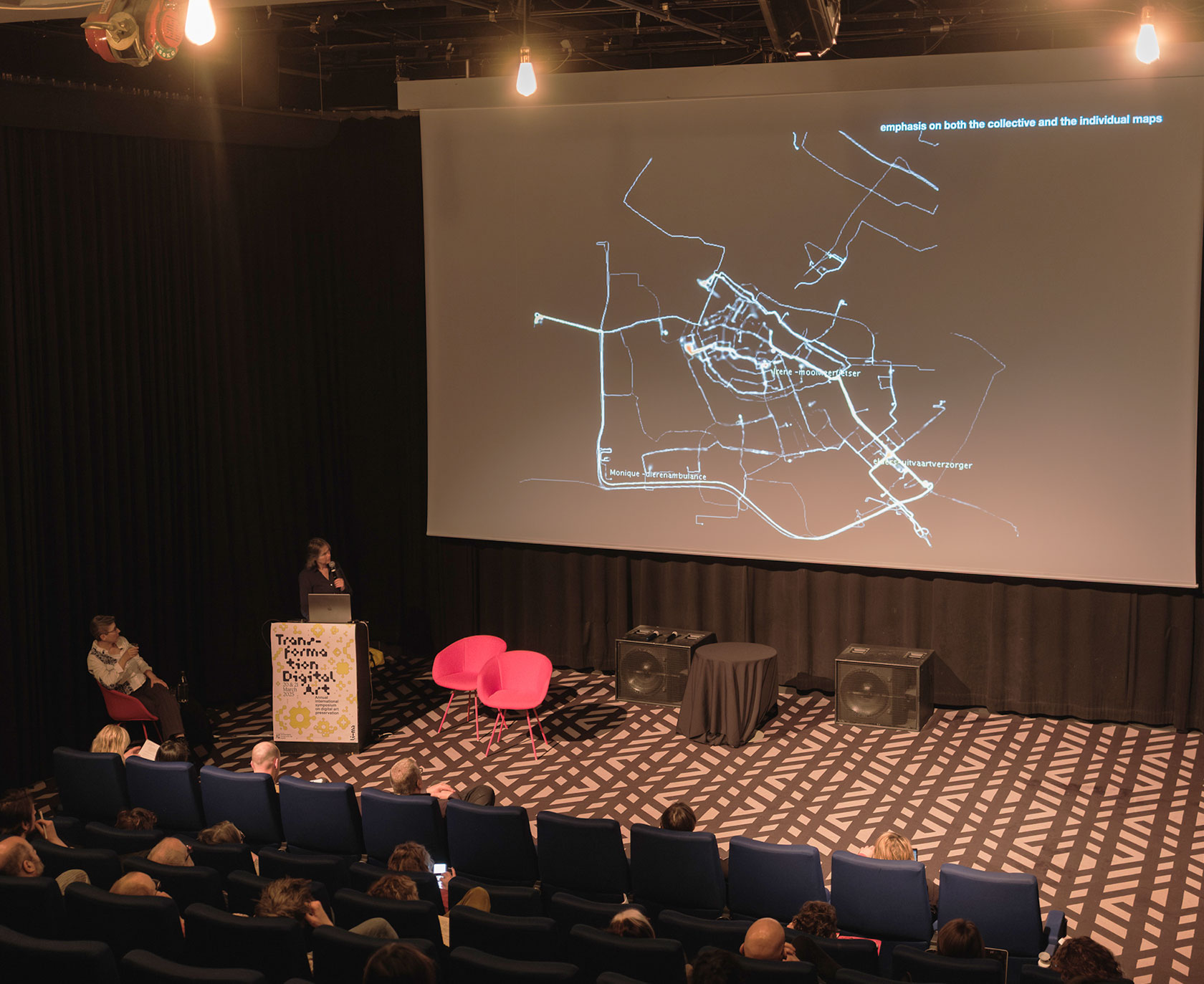
During LI-MA’s yearly Simposium Transformation Digital Art, creative coder Bente van Bourgondiën and Esther received invaluable feedback, which will help to make informed restoration decisions during the coming months.
AmsterdamREALTIME. screencapture of the interactive flash animation, that is now restored.
In the early 2000s, before smartphones and Google Maps, Amsterdam residents relied on their own mental maps to navigate the city. Location-based services could be accessed with dedicated GPS devices, which had only recently become precise enough for mapping and were not commonly used. At the time, media art was at the forefront of exploring both the creative possibilities and critical implications of these locative technologies, long before their widespread commercial adoption.
References
For more details on the resoration, visit the Living Media Art blog. https://li-ma.nl/article/reactivating-amsterdam-realtime-23-years-later/
For more detailes on AmsterdamREALTIME see the projectpage